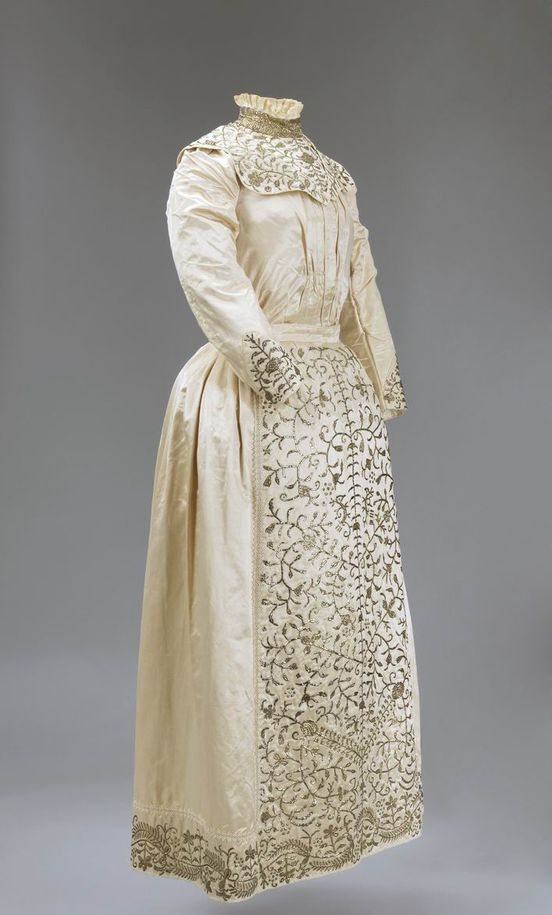
IWhite satin, worked with flowers
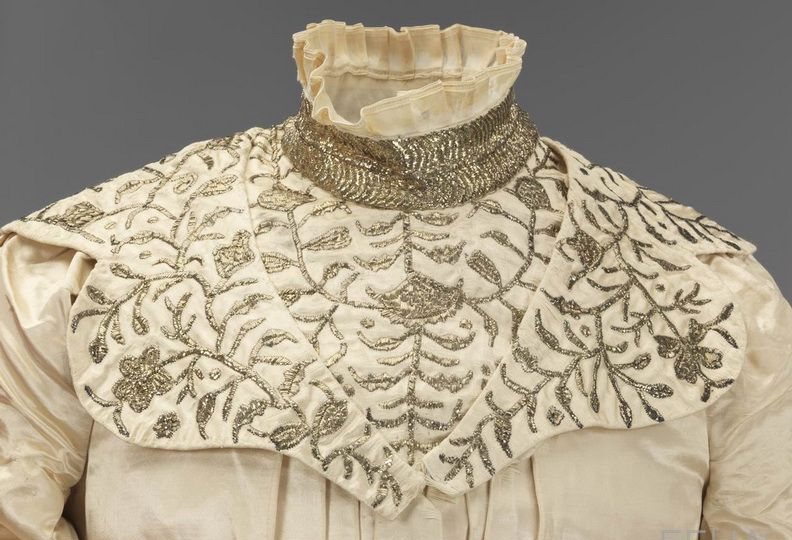
Khatoun married in Baghdad in 1904. Her white satin outfit had a high neck, long sleeves and a fitted bodice. Across the front, flowers and curling stems spread through the embroidery; more flowers climbed the skirt. Even the cuffs had their share. There was a great deal to look at before you reached the hem.
The shape followed European fashions that had reached Baghdad through its trade and schools. The embroidery belonged to the city’s own rich tradition of dressmaking. Khatoun’s wedding clothes brought the two together: white silk satin in a fashionable cut, finished with the intricate metalwork of home.
IIAn evening in red
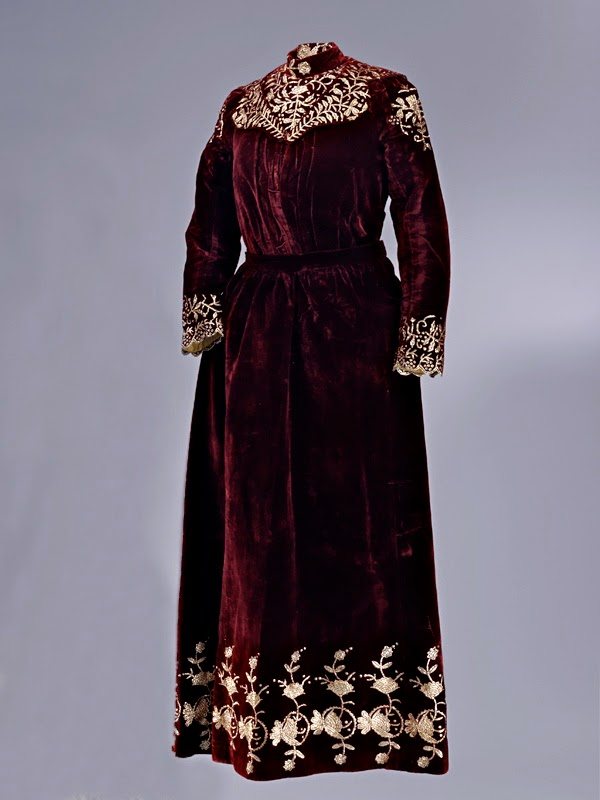
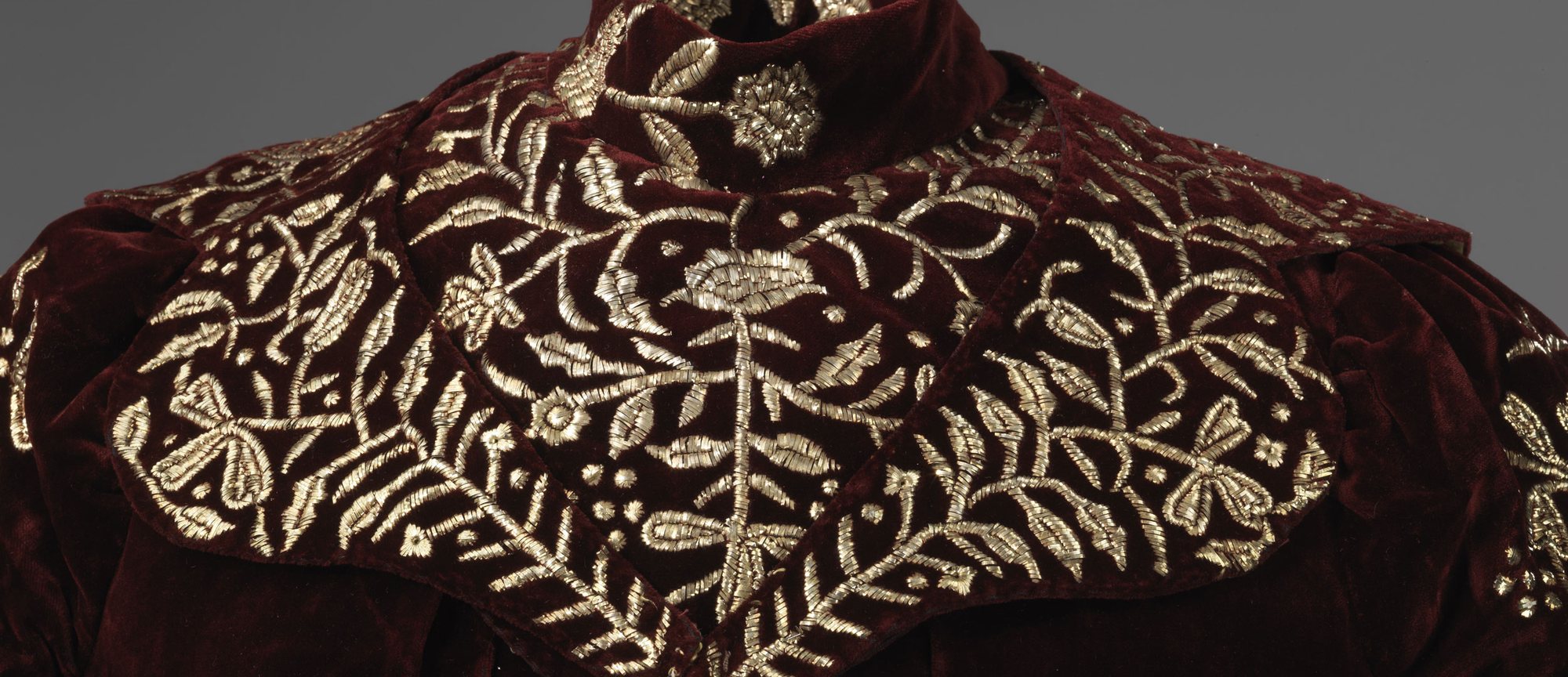
For the henna celebration, there was velvet. Deep red, with pale metal thread worked around the shoulders, cuffs and hem, it was quite a different dress. Up close, its flowers have little centers and slender leaves. The stems loop and turn across the fabric, each small flourish part of a much larger pattern.
Among Baghdad’s Jewish families, the henna evening was a celebration before the wedding, bringing women from the two families together. There were songs, and henna for the bride’s hands, with wishes for good fortune and children. The velvet dress belonged to that part of Khatoun’s wedding; the satin to the marriage itself.
Together, the two outfits carry something a single wedding photograph could easily miss: this was more than one occasion, with more than one way to dress a bride.